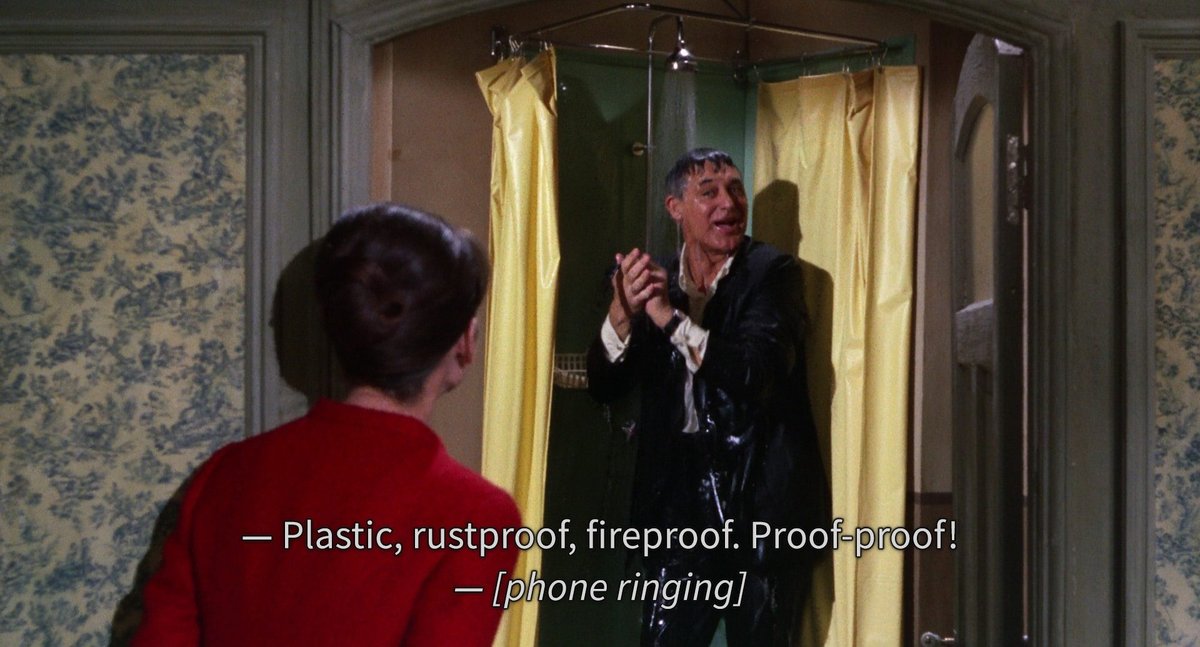
When you settle in to watch a cinematic masterpiece like Titanic, you're likely hoping for an immersive experience—the swelling music, the dramatic dialogue, the creaking of the ship, and the chilling sound of the iceberg collision. But what if you can't hear all of it, or understand the spoken language? This is where Titanic Subtitles for Accessibility (SDH & Closed Captions) become not just a convenience, but a crucial bridge to a truly universal viewing experience. Far beyond simple text on screen, these tools are meticulously crafted to ensure everyone, regardless of hearing ability or language proficiency, can connect with the story unfolding before them.
In this guide, we'll dive deep into the world of accessible subtitles, cutting through the jargon to show you exactly what SDH and Closed Captions are, why they matter, and how they empower millions to enjoy their favorite films, from historical dramas to blockbuster hits.
At a Glance: Key Takeaways
- Closed Captions (CC) are primarily for the deaf and hard of hearing, transcribing dialogue AND all significant audio cues (like
[ominous music]or[waves crashing]). They are toggleable. - Subtitles are typically for viewers who can hear but don't understand the original language, providing only translated dialogue.
- SDH (Subtitles for the Deaf and Hard of Hearing) combine the best of both: they are in the original language, include all audio cues like CC, but visually resemble standard translation subtitles (often with better formatting options). They are the most comprehensive accessibility option.
- Regulations from bodies like the FCC and legal precedents (like the Netflix lawsuit) mandate high standards for caption accuracy, synchronicity, completeness, and placement.
- Automatic captions are often insufficient for accessibility due to issues with accuracy, speaker identification, and nuanced audio description. Professional human transcription is almost always required for true SDH quality.
- Accessible subtitles benefit a far wider audience than just the deaf and hard of hearing, including language learners and those in noisy environments.
Beyond the Dialogue: Why Accessibility Matters
Imagine watching Titanic without being able to hear Rose declare, "I'll never let go, Jack." Or, just as impactful, not hearing the mournful cello as the ship sinks, or the desperate screams of the passengers. For decades, many viewers were left out of these powerful moments simply because the tools to include them weren't widely available or understood. Today, advancements in accessibility mean that films like Titanic can reach every single potential viewer.
While the terms "subtitles" and "captions" are often used interchangeably, they serve distinct purposes. Understanding these differences is the first step toward appreciating the power of truly accessible media.
Unpacking the Jargon: Subtitles vs. Closed Captions vs. SDH
Let's break down the three main types of on-screen text you'll encounter and how they differ in their approach to accessibility.
Standard Subtitles: The Language Bridge
Think of standard subtitles as your linguistic travel guide. Their primary purpose is translation. If you're watching Titanic in its original English, but you primarily speak Spanish, you'd select Spanish subtitles. These typically translate only the spoken dialogue, assuming you can hear the film's audio track.
Key Characteristics of Standard Subtitles:
- Purpose: To translate spoken dialogue for non-native speakers.
- Content: Dialogue only.
- Audience: Viewers who can hear the original audio but need a language translation.
- Visuals: Often appear as white text at the bottom of the screen, blending into the video.
Closed Captions (CC): The Comprehensive Listener
Closed Captions are a powerhouse for accessibility, specifically designed for individuals who are deaf or hard of hearing. Unlike standard subtitles, CC doesn't just transcribe dialogue; it captures the entire audio landscape of a film.
For Titanic, this means not only seeing "I'm the king of the world!" but also [wind howls], [orchestra plays mournful tune], [iceberg scraping metal], and [screaming]. It even specifies who's speaking if it's not visually obvious. The "closed" part means they can be turned on or off by the viewer, distinguishing them from "open captions" which are burned into the video and always visible.
Key Characteristics of Closed Captions (CC):
- Purpose: To provide a complete audio experience in text for the deaf and hard of hearing.
- Content: All dialogue, speaker identification, and crucial non-dialogue audio elements (music, sound effects, ambient noises).
- Audience: Primarily deaf or hard-of-hearing viewers.
- Visuals: Historically, CC often appeared as white text on a black bar, or with a black background, which could sometimes obscure parts of the video. They are legally mandated in many broadcast contexts.
SDH (Subtitles for the Deaf and Hard of Hearing): The Best of Both Worlds
Enter SDH, the most evolved form of accessible subtitles. Introduced largely by the DVD industry, SDH combines the comprehensive audio description of Closed Captions with the visual aesthetics and flexibility of standard subtitles.
Imagine watching Titanic and seeing, in crisp, well-formatted text, not only every line of dialogue but also [Ship's horn blares], [Splash!], or [Rose sobs softly]. All this, presented in the film's original language, just as if you were reading a standard subtitle track.
Key Characteristics of SDH Subtitles:
- Purpose: To provide a comprehensive textual representation of all audio and language information, primarily for deaf or hard-of-hearing viewers who prefer the original language, but also benefiting a broader audience.
- Content: Dialogue, speaker identification, and all significant non-dialogue audio elements, presented in the video's original language.
- Audience: Deaf or hard-of-hearing viewers, foreign-language audiences who are also deaf/hard of hearing, language learners, viewers in sound-sensitive environments, or those with cognitive difficulties.
- Visuals: Visually resemble standard subtitles (no black bars), often allowing for greater customization in terms of font, size, color, and background opacity for better readability. HD formats like Blu-ray often use SDH exclusively for this reason. SDH can even use colors or on-screen alignment to differentiate speakers.
To further understand the depth of accessible options for this classic, you might want to Explore Titanic movie subtitles and see how these different formats are applied in practice.
The Mandate for Inclusion: Regulations and Guidelines
The push for comprehensive accessibility isn't just about good will; it's increasingly a legal requirement. Landmark cases and regulatory guidelines have shaped how media companies approach subtitles and captions.
A significant turning point came in 2012 when a lawsuit established Netflix as a "place of public accommodation." This ruling effectively mandated that Netflix (and, by extension, many other streaming services) must provide captions to ensure equal access for individuals with disabilities. This legal precedent has driven widespread adoption of captioning across the industry, moving it from a niche feature to a standard expectation.
The Federal Communications Commission (FCC) in the United States sets clear guidelines for the quality of captions and subtitles, focusing on four crucial areas:
- Accuracy: Captions must precisely reflect all audio content—dialogue, music, and sounds—even if some judicious shortening is necessary for readability. This means if Jack says "I'm flying, Rose!" the caption shouldn't say "I'm flying, girl!"
- Synchronicity: Captions must perfectly match the timing of the audio track and video timestamps. There's nothing more frustrating than captions that appear too early or too late, especially during fast-paced dialogue or critical sound cues.
- Program Completeness: There should be no gaps in captioning. The entire program, from start to finish, must have captions, ensuring a seamless and unbroken accessible experience.
- Placement: Captions must be positioned on the screen so they don't obstruct crucial visual elements. You shouldn't miss an actor's facial expression, a key prop, or a background setting because the captions are covering it up. SDH, with its ability to adapt placement, often excels here.
Adhering to these guidelines ensures not just compliance, but a genuinely high-quality accessible experience that respects the viewer.
The Craft Behind the Captions: Formatting and Technical Aspects
Creating effective SDH subtitles is an art and a science, blending linguistic precision with technical prowess. It goes far beyond simply typing out what's heard.
Visual Nuances: What You See on Screen
One of the most immediate differences you'll notice between traditional Closed Captions and SDH is their visual presentation. While older CC often used a blocky, white-on-black text style that could sometimes obscure visuals, SDH subtitles are designed to blend more aesthetically with the film. They visually resemble the elegant translation subtitles you'd find on a foreign film.
For instance, watching Titanic with SDH, the text might appear in a clear, legible font without an obtrusive background, often with subtle outlines or shadows to ensure readability against varying visual backdrops. This attention to visual detail is critical for maintaining immersion.
Key formatting features of SDH:
- Dynamic Placement: While generally at the bottom, SDH can sometimes adjust its position slightly to avoid covering important on-screen graphics or character actions.
- Speaker Identification: SDH can use different colors, italics, or on-screen alignment (e.g., text appearing near the speaker) to clearly distinguish who is speaking, which is particularly helpful in scenes with multiple characters like the frantic deck scenes in Titanic.
- Enhanced Readability: The ability to incorporate colors, outlines, and shadows significantly improves contrast and ensures the text is clear against both dark and light scenes.
- Scene Timing: SDH subtitles are meticulously timed to coincide with video scenes and dialogue cues, appearing on screen for the appropriate duration to allow comfortable reading without rushing or lingering.
It's no surprise that modern high-definition formats, such as Blu-ray discs, have largely adopted SDH subtitles as their preferred method for accessibility, recognizing their superior visual integration and comprehensiveness.
The Technical Backbone: Encoding and Formats
Behind the scenes, the creation and delivery of SDH subtitles involve complex technical processes. SDH subtitles are encoded differently depending on the distribution medium. For physical media like DVDs or Blu-rays, they might be encoded as bitmap images or pixels, ensuring a consistent visual appearance regardless of the playback device. For streaming platforms, they might be delivered as text-based formats that the player renders dynamically.
The world of subtitle formats is vast, with over 20 different types in existence (e.g., SRT, VTT, SCC, XML). The optimal choice often depends on the platform and its specific requirements, as not all formats preserve advanced features like positioning or colors across different viewing environments. This complexity highlights why professional subtitling services are essential, ensuring compatibility and quality.
Creating SDH subtitles for a film like Titanic demands a comprehensive transcription process. This isn't just listening for dialogue; it's listening for every creak, every splash, every distant yell, every piece of background music, and identifying every speaker—a painstaking effort to recreate the full auditory experience in text.
The Widespread Impact: Who Benefits from SDH?
While the initial impetus for SDH subtitles was accessibility for the deaf and hard of hearing, their utility extends far beyond this crucial group. SDH benefits a remarkably broad audience:
- The Deaf and Hard of Hearing: This is, of course, the primary beneficiary. SDH ensures they receive the full narrative and emotional context of a film, just as a hearing viewer would.
- Non-Native English Speakers: Even if they can hear, understanding rapid-fire dialogue or regional accents can be challenging. SDH in the original language helps them follow along and improve comprehension.
- Language Learners: For those studying English, SDH provides an invaluable tool to connect spoken words with their written form, aiding vocabulary acquisition and listening skills.
- Individuals with Cognitive Difficulties: Reading along can aid comprehension and retention for viewers who may struggle with processing spoken information alone.
- Viewers in Sound-Sensitive Environments: Watching Titanic on a crowded train, in a quiet office, or late at night when others are sleeping is made possible without missing any critical plot points or emotional cues.
- Viewers with Audio Processing Disorders: For those whose brains struggle to interpret auditory information, seeing the text can significantly enhance their ability to follow dialogue and plot.
The Pitfalls of Automatic Captioning
With the rise of AI and speech-to-text technology, automatic captioning services have become more common. While these can be a quick solution for casual content, they are generally insufficient for producing high-quality SDH subtitles, especially for professional media like feature films.
Common challenges with automatic captioning:
- Accuracy Issues: Accents, slang, complex vocabulary, and quick dialogue often trip up AI, leading to glaring errors.
- Background Noise: AI struggles to differentiate dialogue from ambient sounds, often misinterpreting or omitting crucial parts. Imagine an AI trying to parse dialogue amidst the sound of the Titanic's engines or the chaos of its sinking.
- Low-Quality Audio: Poor microphone quality or recording conditions can render automatic captioning nearly useless.
- Speaker Differentiation: AI often fails to correctly identify distinct speakers, which is vital for following conversations.
- Music and Sound Effects: Automatic systems frequently miss or inaccurately describe music lyrics or critical sound effects (e.g.,
[ominous music]vs.[music playing]). - Technical Glitches: Random errors, missing words, or misaligned timing are common.
For these reasons, professional human transcription and expert QC (quality control) are indispensable for creating SDH subtitles that meet accessibility standards and provide a truly equitable viewing experience.
Practical Guidance: Making the Most of SDH
As a viewer, utilizing SDH subtitles is usually as simple as navigating your media player's options. Look for icons like CC or a speech bubble, and then select the "English (SDH)" or similar option.
For Content Creators: Best Practices for True Accessibility
If you're a content creator aiming for genuine accessibility, keep these best practices in mind:
- Prioritize Human Transcription: Invest in professional subtitling services. While more costly upfront, the quality and compliance benefits are invaluable.
- Comprehensive Transcription: Ensure your transcription includes all dialogue, speaker IDs, and meaningful non-dialogue audio cues.
- Adhere to FCC Guidelines: Double-check accuracy, synchronicity, completeness, and placement.
- Use Appropriate Formatting: Employ clear fonts, sufficient contrast, and intelligent positioning. Consider using different colors for different speakers or for sound effects.
- Test Across Platforms: Verify that your SDH files display correctly and consistently across various devices and streaming services.
- Gather User Feedback: The best way to know if your captions are truly accessible is to ask the people who rely on them.
Looking Forward: A More Inclusive Viewing Future
The journey from basic subtitles to sophisticated SDH has transformed how we consume media. For a film as iconic and beloved as Titanic, ensuring its story can be experienced by everyone, everywhere, is not just a technical achievement but a testament to our collective commitment to inclusion.
By understanding the nuances between standard subtitles, closed captions, and the comprehensive power of SDH, we empower ourselves as viewers and equip content creators to deliver richer, more meaningful experiences. So next time you press play, consider the intricate work behind those on-screen words—they're not just text, they're a gateway to a world of stories, open to all.