As a seasoned video editor or content creator, you know that subtitles are more than just text on a screen. They're a bridge to understanding, a lifeline for accessibility, and a powerful tool for engagement. But dive beneath the surface, and you’ll find a fascinating world of formats, each with its own strengths and quirks. Today, we’re embarking on an expedition: Exploring Titanic Subtitle Formats (SRT, VTT, ASS), dissecting what makes each unique, and helping you navigate their intricate depths.
Choosing the right subtitle format can feel like a small decision, but it profoundly impacts your audience's experience and your content's reach. Get it right, and your message resonates globally. Get it wrong, and you might inadvertently exclude viewers or miss out on creative opportunities.
At a Glance: Your Subtitle Format Survival Guide
- SRT (SubRip Subtitle): The universal workhorse. Simple, widely supported by almost all platforms, but limited in styling options.
- VTT (WebVTT): The web-native champion. An evolution of SRT, designed for HTML5 video, offering basic styling and web-specific features.
- ASS (Advanced SubStation Alpha): The artistic powerhouse. Unmatched for complex styling, precise positioning, and intricate animations, often used in anime.
- TXT (Plain Text): The barebones option. No timestamps, no styling, rarely used for actual video subtitles.
- Conversions: SRT to VTT is safe; VTT to SRT loses web-specific features. ASS to SRT means major loss of all advanced elements. SRT to ASS is an upgrade, adding structure for future styling.
More Than Just Words: Why Subtitle Formats Truly Matter
In a world craving visual content, subtitles have transcended their traditional role. They're no longer just for the deaf or hard of hearing (though their importance for accessibility remains paramount). Think about watching a video on mute on social media, understanding a foreign film, or catching dialogue in a noisy environment. Subtitles make all this possible. They boost engagement, extend your reach to non-native speakers, and even improve SEO for your video content.
But beneath that simple stream of text, there's a technical backbone: the subtitle format. Each format dictates how text is timed, styled, and presented, directly influencing where and how your subtitles can be used. Understanding these differences isn't just technical trivia; it's a strategic advantage for any content creator.
The Big Three: A Deep Dive into SRT, VTT, and ASS
Let's break down the titans of the subtitle world, understanding their origins, capabilities, and ideal use cases.
SRT: The Undisputed King of Compatibility
If you've ever dealt with subtitles, chances are you've encountered an SRT file. SRT, short for SubRip Subtitle, is the de facto standard globally, celebrated for its simplicity and near-universal support. It's the format you'll upload to YouTube, Facebook, TikTok, Vimeo, and Netflix, making it an indispensable tool for broad platform compatibility.
What makes SRT so pervasive? Its minimalist design. An SRT file is essentially a plain text file structured into distinct subtitle entries. Each entry follows a straightforward pattern:
- A sequence number: To keep track of each subtitle cue.
- Timestamps: Indicating when the subtitle should appear and disappear, down to milliseconds.
- The subtitle text: What's actually displayed on screen.
- A blank line: Separating one subtitle entry from the next.
This straightforward structure is its superpower. It means almost any video player or platform can parse an SRT file and display its contents correctly.
Pros of SRT:
- Universal Compatibility: Supported by nearly every video player, editor, and platform imaginable.
- Simplicity: Easy to create, edit, and understand, even with basic text editors.
- Lightweight: Small file sizes, quick to load.
Cons of SRT: - Limited Styling: Offers very basic styling (e.g., italic, bold, underline) and no control over font, color, or precise positioning.
- No Metadata: Lacks advanced features like speaker identification tags or cue settings.
Example SRT Entry:
1
00:00:01,500 --> 00:00:04,000
Welcome to our guide on subtitles!
2
00:00:04,500 --> 00:00:07,800
This format is the most popular worldwide.
Notice the comma before the milliseconds and the clear-->separator. This precise timing is crucial for syncing with your video, whether you're narrating a documentary or ensuring the dialogue for your Titanic movie subtitles is perfectly aligned.
VTT: The Web-Native Evolution
WebVTT, or simply VTT, is SRT's more sophisticated, web-savvy sibling. Developed by the W3C (World Wide Web Consortium), VTT is the standard for HTML5 video subtitles and captions. It was designed specifically to serve the needs of web videos, offering improvements over SRT while maintaining a similar foundational structure.
Think of VTT as SRT "plus." It retains the core elements of sequence, timestamps, and text, but adds features essential for a richer web experience. These include:
- Basic Styling: Support for bold, italic, and underline, similar to SRT, but also
<i>for italic,<b>for bold, and<u>for underline. - Speaker Identification: The ability to tag speakers, like
<v John>Hello!</v>. - Cue Settings: Control over subtitle position on the screen, alignment, and display direction.
- Metadata: Capabilities for describing the track, such as language.
Why VTT for the web? Its integration with HTML5 video players allows for greater control and customization directly within web browsers, making it ideal for streaming services, online courses, and interactive video content.
Pros of VTT: - HTML5 Standard: Natively supported by modern web browsers and HTML5 video players.
- Enhanced Accessibility: Better support for accessibility features like descriptions for sound effects.
- Basic Styling & Positioning: More control over how subtitles appear on screen compared to SRT.
Cons of VTT: - Less Universal: While widely supported on the web, it's not as universally recognized across all offline players or older software as SRT.
- Still Limited Styling: Cannot achieve the pixel-perfect precision and elaborate effects of ASS.
Example VTT Entry:
WEBVTT
00:00:01.500 --> 00:00:04.000 align:middle line:80%Welcome to our WebVTT guide!
00:00:04.500 --> 00:00:07.800
This format is perfect for web videos.
You'll noticeWEBVTTat the very top, the period instead of a comma for milliseconds, and thealign:middle line:80%cue settings. These subtle differences grant web developers more control over presentation.
ASS: When Subtitles Become Art
For those who demand ultimate creative control over their subtitles, there's ASS. Advanced SubStation Alpha is the undisputed heavyweight champion of advanced text-based subtitle formats. If you've ever watched fan-subbed anime with beautifully stylized character names, intricate karaoke effects, or subtitles that dance across the screen, you've witnessed the power of ASS.
ASS goes far beyond simple text display. It offers:
- Pixel-Perfect Positioning: Precisely place text anywhere on the screen.
- Extensive Styling: Full control over font (type, size, color, bold, italic, outline, shadow), background, and more.
- Animations and Effects: Create scrolling credits, fading text, karaoke effects, and other dynamic movements.
- Drawing Primitives: Basic shapes and vectors can be drawn.
The complexity of ASS files reflects their power. They feature a sophisticated structure that includes: - A Header Section: Defines general settings and, critically,
[V4 Styles]or[V4+ Styles]where all custom font styles, colors, and effects are defined. - An Events Section: Contains the timed subtitle entries, referencing the styles defined in the header.
Pros of ASS: - Unmatched Creative Control: The most powerful format for design and animation.
- Pixel-Perfect: Precise placement and rendering, ensuring your vision is perfectly realized.
- Standard for Complex Projects: The go-to for anime fansubbing, music videos, and projects requiring distinct visual flair.
Cons of ASS: - Complexity: Steep learning curve; creating or editing ASS files often requires specialized software.
- Niche Support: Not universally supported by all players or platforms. Web players typically won't render all advanced ASS features without specific plugins or prior conversion to a video stream.
- Larger File Sizes: Due to all the styling information, ASS files are generally larger than SRT or VTT.
Example ASS Concept: Imagine a character speaking. With ASS, their dialogue could automatically appear in a specific font, color, and size unique to them, even positioned next to their head on screen. When a song plays, the lyrics could change color syllable by syllable to indicate karaoke timing. This level of dynamic presentation is what sets ASS apart.
And a Nod to TXT: The Barebones Basic
While SRT, VTT, and ASS dominate the video subtitle landscape, it's worth a quick mention of TXT files. A plain text (.txt) file is exactly what it sounds like: raw, unformatted text. It contains no timing information, no styling, and no structural metadata.
Use Case: TXT files are typically used for transcribing dialogue before it's formatted into a timed subtitle file, or as a simple script. They are not suitable for direct use as video subtitles because without timestamps, the player has no idea when to display the text. It's the starting point, not the finished product.
Choosing Your Champion: When to Use Which Format
With a clearer picture of each format, how do you decide which one is right for your project? It comes down to your priorities: compatibility, creative control, and target platform.
- For Maximum Reach and Simplicity: Go with SRT.
If your goal is to make your video accessible on YouTube, Netflix, social media, or practically any device, SRT is your safest bet. It's the lingua franca of subtitles. Use it when basic text display is sufficient, and you prioritize universal playback over elaborate aesthetics. Think educational videos, vlogs, corporate presentations, or most mainstream film and TV releases. - For Modern Web Video and Basic Control: Embrace VTT.
If your content lives primarily on the web, especially within HTML5 video players (like on your own website or a platform that leverages advanced web standards), VTT is often the superior choice. It offers better integration with web technologies, allows for some basic styling and positioning, and is built for a richer online viewing experience. It's an excellent step up from SRT for web-focused projects. - For Artistic Expression and Pixel-Perfect Design: Master ASS.
When your subtitles are an integral part of the visual storytelling, or when you need intricate animations, custom fonts, and precise placement, ASS is the only format that can deliver. This is the realm of anime fansubbing, music videos with synchronized lyrics, or highly stylized short films where the text itself is a design element. Be prepared for a steeper learning curve and potentially narrower platform support.
Think of it like this: - SRT is like a text message: Quick, simple, gets the basic message across.
- VTT is like an email with basic formatting: More structure, a little styling, good for official communication online.
- ASS is like a graphic design project: Full creative suite, requires specialized tools, can produce stunning results.
The Art of Transformation: Navigating Subtitle Conversions
Sometimes, you start with one format but need another. Whether it's to meet platform requirements or to unlock new creative possibilities, converting subtitle formats is a common task. However, conversions aren't always lossless. It's crucial to understand what you gain and what you might lose.
SRT <=> VTT: The Safest Swaps
These two formats are closely related, making conversions between them relatively straightforward.
- SRT → VTT: This is generally a safe conversion with no data loss. VTT is essentially a superset of SRT; it can preserve all SRT features (sequence numbers, timestamps, and plain text) while adding its own structural elements. You're effectively upgrading the file to a web-native standard.
- VTT → SRT: This conversion results in minor data loss. VTT-specific features, such as advanced cue settings (like
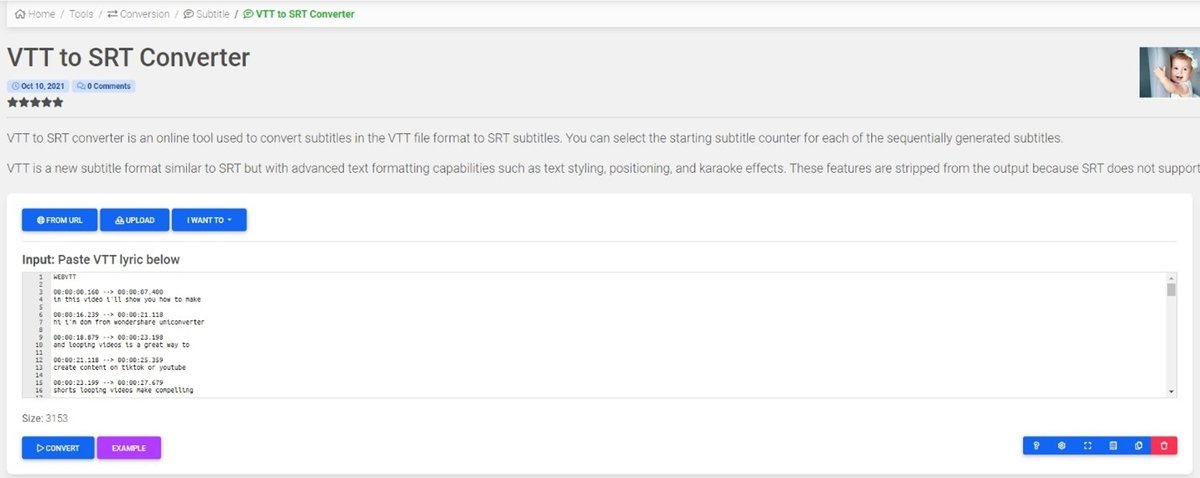
align:middle), CSS classes, and speaker tags (<v Narrator>), will be stripped away because SRT doesn't support them. However, the core text and timing information will be preserved intact. If you need to revert a VTT file for broader compatibility, this is a viable option, but be aware of the stripped features.
ASS → SRT: The Compromise for Compatibility
This conversion involves a significant downgrade in capabilities and therefore leads to major data loss.
When you convert an ASS file to SRT, you will lose all styling, pixel-perfect positioning, animations, effects, and custom fonts. Only the plain text and basic timing information (when the text appears and disappears) will be retained. The rich visual artistry of ASS is stripped away, leaving only the bare dialogue.
When is this recommended? Only when absolute compatibility is critical, and the advanced styling of ASS is a hindrance rather than a feature for the target platform. For instance, if you've created a complex fan-subbed anime episode with ASS but need to upload a basic subtitle track to YouTube, converting to SRT would be necessary, accepting the visual compromise.
SRT → ASS: Unlocking Creative Potential
This is a safe upgrade. When you convert an SRT file to ASS, you're essentially adding the more complex ASS file structure (header, default styles, events section) to your existing text and timing. No information is lost; instead, you're creating a framework within which you can later add extensive styling, positioning, and effects manually. This is an excellent starting point if you have an existing SRT track and now want to enhance it with advanced visual elements.
Practical Tips for Managing Your Subtitle Files
Handling subtitle files efficiently can save you time and headaches. Here are a few best practices:
- Consistent Naming Conventions: Label your subtitle files clearly, often using the video filename followed by language code and format (e.g.,
MyVideo.en.srt,MyVideo.es.vtt). This makes organization much easier, especially for projects like Titanic movie subtitles where multiple language tracks are common. - Encoding Matters (UTF-8 is Your Friend): Always save your subtitle files with UTF-8 encoding. This ensures that special characters, accents, and non-Latin alphabets (like Japanese, Arabic, or Cyrillic) are displayed correctly across different systems and platforms, preventing garbled text.
- Choose the Right Tools:
- For SRT/VTT: Simple text editors (like Notepad, Sublime Text, VS Code) can work, but dedicated subtitle editors (e.g., Subtitle Edit, Aegisub) offer waveform displays, spell checkers, and easier timing adjustments.
- For ASS: Specialized tools like Aegisub are almost essential due to the complexity of styles, positioning, and animation keyframes.
- For Conversions: Many online converters and desktop software can handle conversions between formats, but always double-check the output for any unintended data loss or formatting issues.
- Test, Test, Test: Always load your subtitle file with your video in its target environment (e.g., your website, YouTube, VLC player) to ensure perfect synchronization, correct display of characters, and proper rendering of any styling. A visually striking subtitle is useless if it's out of sync.
Beyond the Basics: Common Questions & Misconceptions
Let's clear up some frequently asked questions and common misunderstandings about subtitles.
"Are subtitles just for the deaf/hard of hearing?"
Absolutely not! While crucial for accessibility, subtitles benefit a much broader audience. They're invaluable for:
- Foreign Language Viewers: Understanding content in a language they're learning or are not fully fluent in.
- Noisy Environments: Watching videos in public places without headphones.
- Sound-Sensitive Situations: Avoiding disturbing others with audio.
- Learning: Aiding comprehension for complex topics.
- SEO: Some platforms can index subtitle text, making your video content more discoverable.
"Can I embed subtitles directly into a video?"
Yes, you can, but there's a distinction:
- Soft Subtitles (External/Toggleable): These are separate files (like SRT, VTT, ASS) that a video player loads alongside the video. Viewers can usually turn them on or off, and switch between languages. This is the most flexible approach.
- Hard Subtitles (Burned-in/Open Captions): These are permanently encoded into the video frames during editing or export. They become part of the video itself and cannot be turned off. This ensures everyone sees them but removes viewer choice and flexibility. This is common for content intended for platforms without robust soft subtitle support or for artistic choices where subtitles are a fixed design element.
Our focus here is on soft subtitle formats, which offer much greater versatility.
"What's the difference between subtitles and closed captions?"
While often used interchangeably, there's a subtle but important distinction:
- Subtitles primarily translate spoken dialogue.
- Closed Captions (CC) aim to transcribe all audio content, including dialogue, sound effects (e.g.,
[door creaks]), music descriptions (e.g.,[upbeat jazz music]), and speaker identification. CC also imply the ability to be turned on or off.
From a file format perspective, both subtitles and closed captions often use the same formats (SRT, VTT, etc.), but the content within the file differs to meet the broader requirements of closed captions.
Your Subtitle Toolkit: Next Steps for Video Creators
Navigating the world of subtitle formats doesn't have to be daunting. By understanding the core strengths of SRT, VTT, and ASS, you're now equipped to make informed decisions that will enhance your content's reach, accessibility, and overall impact.
Remember:
- For broad compatibility and ease, SRT is your go-to.
- For web-native videos with basic styling, VTT is a solid choice.
- For ultimate creative expression, ASS provides unparalleled power.
Don't be afraid to experiment with different tools and workflows. Start simple, then build up your expertise as your needs evolve. The right subtitle format not only ensures your message is heard but also ensures it's experienced exactly as you intend. Dive in, explore, and let your words connect with every viewer, everywhere.